
The holiday decorations are packed away, the confetti has settled, and now the January reality sets in: credit card bills from December and big financial goals for the year ahead.
Usually, finding extra capital in the New Year means tightening belts or picking up a side hustle. But in 2026, the solution might be sitting in the back of your jewelry box or tucked away in a safe deposit box.
We are currently living through a historic gold bull market. With prices smashing through previous records and analysts eyeing the $5,000 per ounce milestone, gold is no longer just a “safe haven”—it’s a potentially massive pile of unrealized cash.
If you’re sitting on gold you no longer wear, need, or want, there has arguably never been a better time to convert that metal into New Year capital. Here is your 2026 guide to selling smart.
Why is Gold Soaking in 2026?
Before you sell, it helps to understand why buyers are so eager. You aren’t just getting lucky; you are capitalizing on a global economic trend.
Over the last two years, central banks around the world have been buying gold at a record pace to diversify away from volatile currencies. Add in persistent inflation and global geopolitical uncertainty, and investors have flocked to the yellow metal.
The result: We are in an undeniable seller’s market. The inherited coin collection or that broken gold chain from the 90s is worth significantly more today than it was even three years ago.
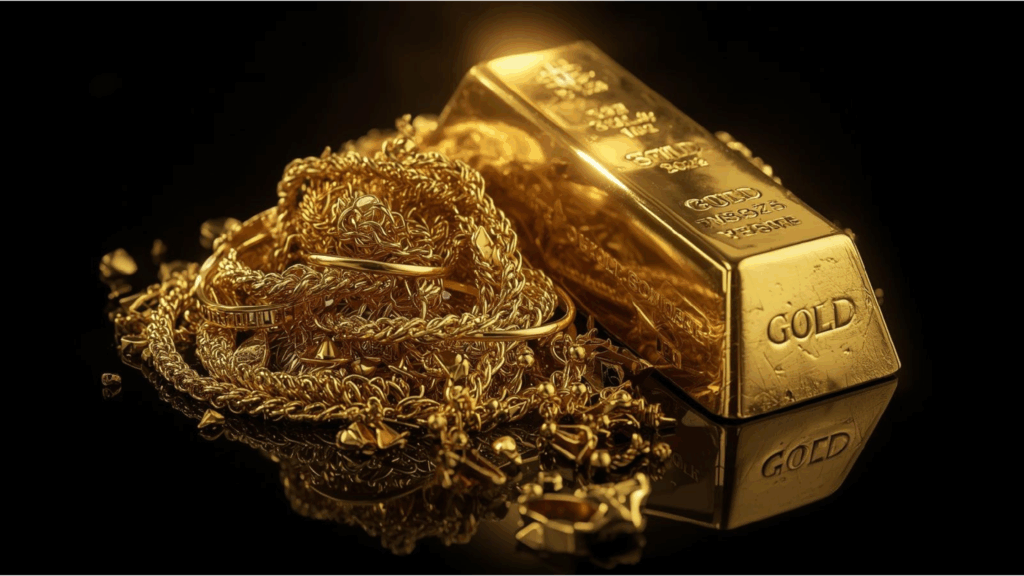
Step 1: Know What You Have (Bullion vs. “Scrap”)
Not all gold is created equal when it comes time to sell. You generally fall into one of two categories:
1. Investment Grade Bullion: These are government-minted coins (like American Eagles or Canadian Maples) or recognized bars (like PAMP or Valcambi). These are the easiest to sell. Because their purity is guaranteed, you should expect to get very close to the current “spot price” for these.
2. Jewelry and “Scrap” Gold: This is what most people have lying around—old rings, broken necklaces, or out-of-style earrings. When selling this, you are usually selling it for the “melt value.”
The Reality Check: Unless the piece is from a famous designer (like Tiffany or Cartier), you won’t be paid for the craftsmanship or the gems; you will be paid solely for the gold content.
Understand Karats: Pure gold is 24K. Your jewelry is likely 14K (58.3% gold) or 18K (75% gold). You will only be paid for the percentage that is pure gold.

Step 2: The Rules of Selling in 2026
With prices this high, predatory buyers come out of the woodwork. Don’t get ripped off. Follow these rules to maximize your return:
Know the “Spot Price”: Before you walk into any shop, look up the live spot price of gold on your phone. This is the baseline global trading price for one ounce of pure gold. If you don’t know this number, you are flying blind.
Avoid “We Buy Gold” Kiosks: Pop-up kiosks in malls or generic “cash for gold” storefronts often offer the lowest payouts, sometimes as low as 50% of the gold’s actual value. They rely on convenience and ignorance.
Get Three Quotes: Treat this like getting a car repair. Take your items to:
A reputable local coin shop (they often pay the best for bullion).
A well-established local jeweler.
An online bullion dealer (many have mail-in programs for selling).
The variance in offers might shock you. The highest offer wins.

Step 3: Using Your New Capital Wisely
So, you’ve capitalized on the 2026 gold rush and have a lump sum of cash. Now what?
Selling an appreciating asset like gold to buy depreciating consumer goods (like a new TV or clothes) is generally a poor financial move. Use this windfall to set up your 2026 for success:
Destroy High-Interest Debt: If you have holiday credit card debt sitting at 20% APR, using your gold proceeds to wipe it out is an immediate, guaranteed return on investment.
Fund the Emergency Reserve: If your savings are looking thin, park this cash in a high-yield savings account for a rainy day.
Rebalance Your Portfolio: Perhaps you are heavy in precious metals and light on equities. You can use this capital to buy into the stock market, diversify into real estate investments, or even explore digital assets.
The Bottom Line
Selling gold can be emotional, especially if it holds sentimental value. But if you are holding onto items you have no attachment to, 2026 offers a rare window of opportunity to turn unused metal into significant financial progress.