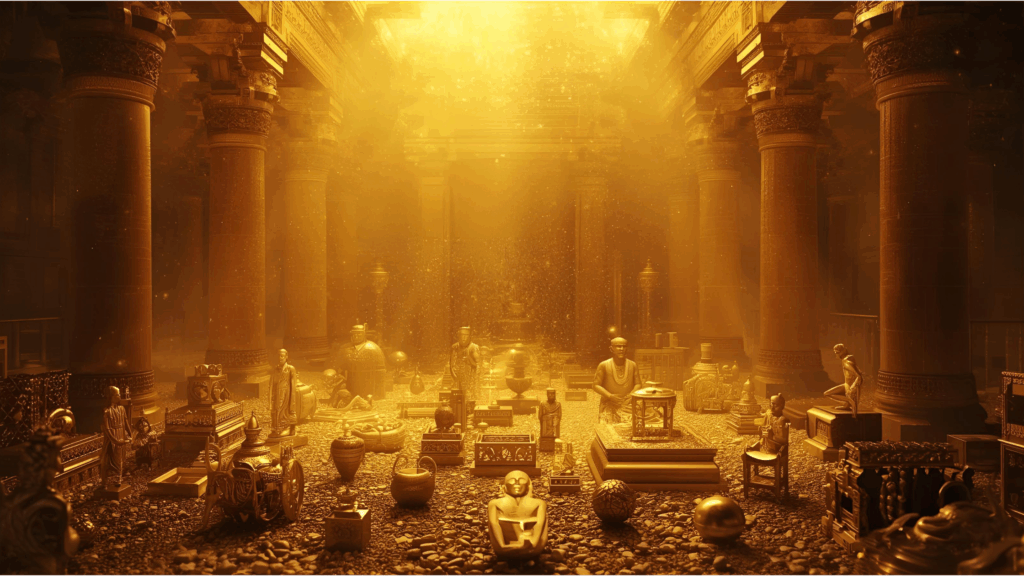
Gold has been treasured by civilizations for millennia, but its true origin story is far more dramatic than any earthly legend. It didn’t just appear on Earth—it was forged in the fiery chaos of the universe.
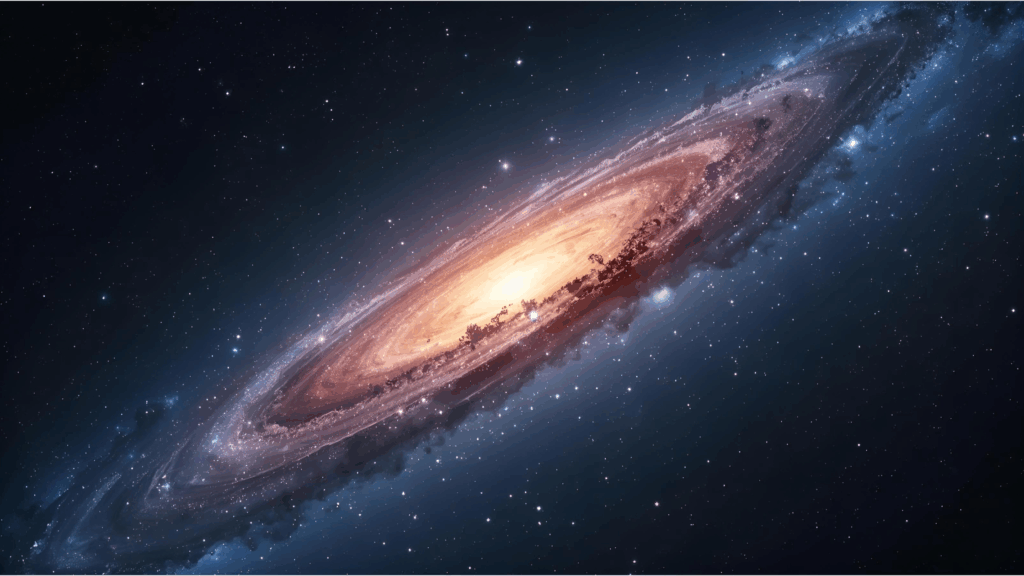
1. The Cosmic Origin: Born in Star Explosions 💥
To understand where gold comes from, we have to look to the deepest parts of space. Gold is a heavy element, meaning it has a high atomic number (79). It cannot be created through the normal fusion processes that power stars like our sun.
A. The Requirement: Extreme Energy
Lighter elements, up to iron, are created in the core of massive stars through nuclear fusion. However, forming elements heavier than iron, including gold, requires energy levels so immense they can only be achieved in two scenarios:
Supernovae: The spectacular death of a massive star, which triggers an enormous explosion. The force and energy of a supernova are sufficient to rapidly fuse lighter elements into heavy ones (a process called the r-process, or rapid neutron capture).
Neutron Star Mergers: This is now considered the primary source. When two incredibly dense neutron stars collide, they release more energy than a supernova and create the perfect conditions to synthesize gold, platinum, and other heavy metals.
The gold atoms forged in these cosmic cataclysms were scattered across the galaxy as dust, eventually mixing into the cloud of gas and debris that formed our solar system and Earth about $4.5$ billion years ago.
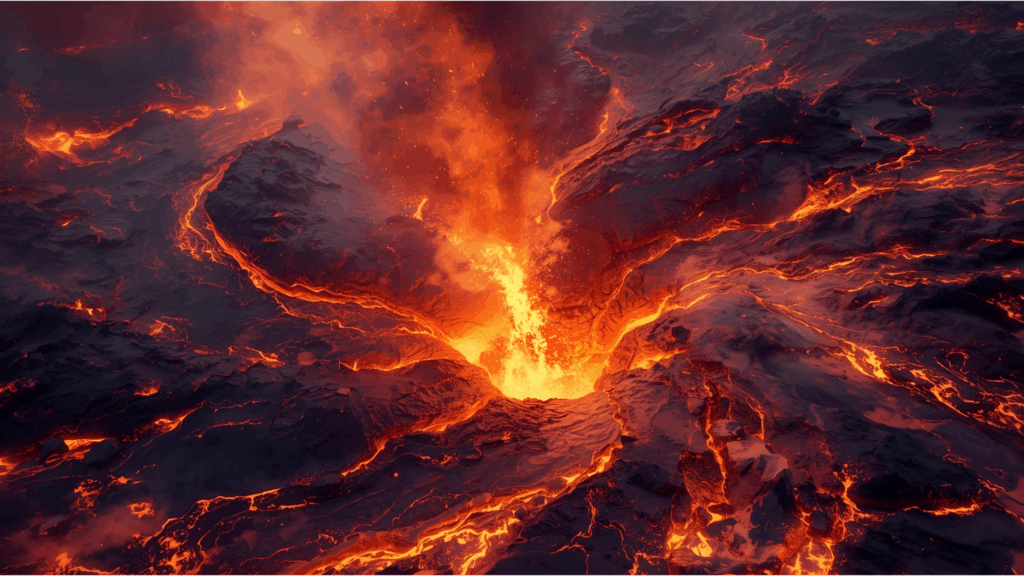
2. The Terrestrial Origin: Earth’s Golden Core 🌍
When the Earth formed, it was largely a molten mass. Since gold is a siderophile (iron-loving) element, most of the planet’s initial gold supply was gravitationally pulled toward the center, sinking down to form the Earth’s core.
If all of the gold in Earth’s core were brought to the surface, it would be enough to coat the entire planet in a layer nearly half a meter thick!
A. The “Late Veneer” Theory
So, if most of our gold is trapped in the core, how did we find it in the crust? Scientists believe the gold accessible to us arrived after the Earth’s main core formation was complete.
This is known as the “Late Veneer” theory. It proposes that about $4$ billion years ago, Earth was bombarded by a final wave of meteorites and asteroids—the very last of the building blocks of the solar system. These impactors deposited a final, thin veneer of material, including the gold, onto the planet’s mantle and crust, which is where we mine it today.
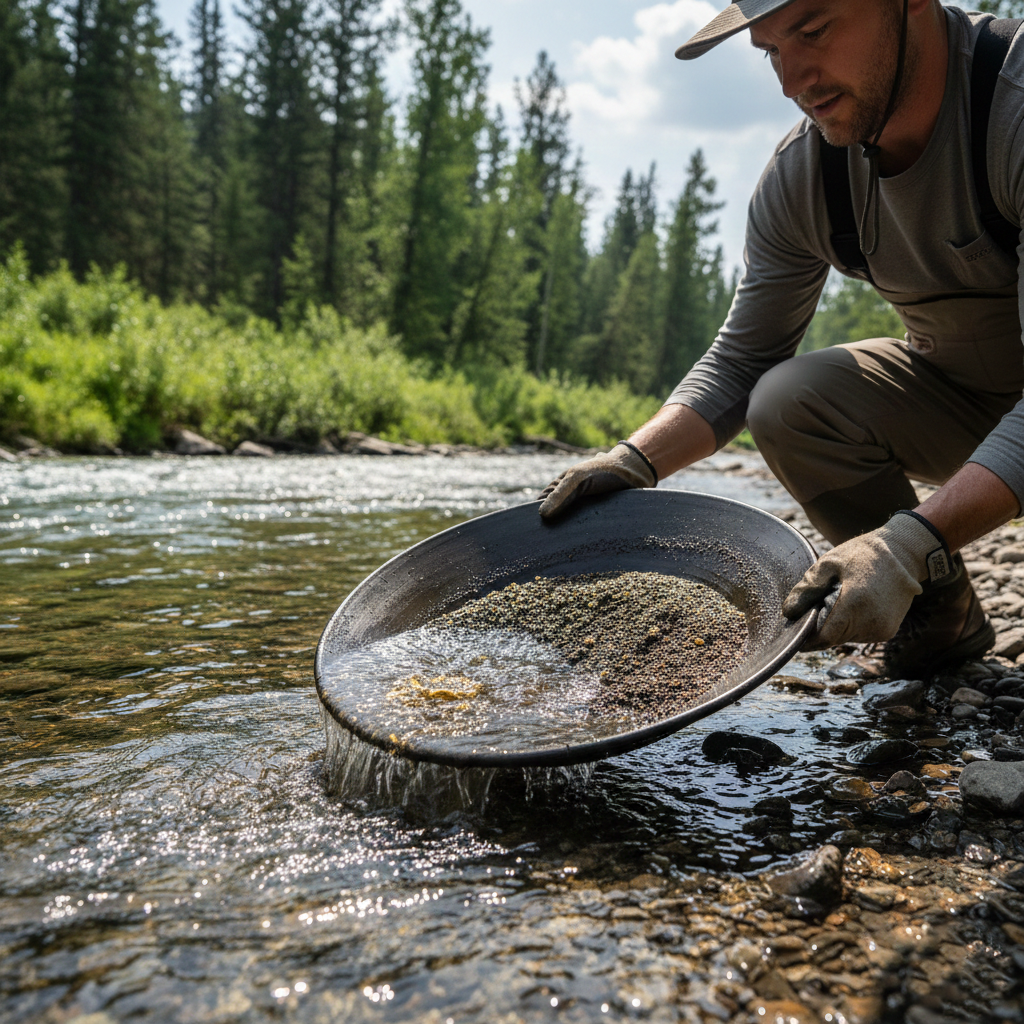
3. How Gold Gets Concentrated: From Veins to Rivers 💧
Once the gold was in the crust, natural geological processes worked to concentrate it into minable deposits.
A. Primary Deposits (Veins)
Hydrothermal Vents: Deep within the Earth, water heated by magma becomes superheated and highly corrosive. This water dissolves tiny amounts of gold and other minerals from surrounding rocks.
Vein Formation: As the hot, gold-rich fluid rises toward the surface, it cools. When the temperature or pressure changes, the gold and quartz precipitate out of the solution, forming seams or veins within the host rock.
B. Secondary Deposits (Placer Deposits)
Weathering and Erosion: Over millions of years, the gold-bearing quartz veins exposed on the surface are broken down by wind and water.
Alluvial Concentration: Since gold is extremely dense and chemically inert (it doesn’t rust), it resists being washed away. River currents carry the lighter sediment away, but the heavy gold particles settle at the bottom of riverbeds, in crevices, or behind boulders. These deposits are known as placer deposits and are what ancient miners and gold panners searched for.

👑 The Legacy of Cosmic Gold
Every gold coin, every piece of jewelry, and every electronic component containing gold is made up of atoms that are literally stardust, forged in an interstellar collision billions of years ago.
The next time you hold a piece of gold, remember you’re holding a piece of cosmic history—a treasure born of violence and gravity, refined by time, and delivered to us by meteorites and rivers.